About Phnom Penh
Phnom Penh is the capital and largest city of Cambodia, located at the confluence of the Mekong and the Tonle Sap rivers.Once a rough change for western visitors, Phnom Penh has seriously improved over the past few years
About Siem Reap
Siem Reap is the capital city of Siem Reap Province in northwestern Cambodia, and is the gateway to Angkor region. Siem Reap today, being a popular tourist destination, has a large number of hotels and restaurants.
About Cambodia Rice
Cambodia has recently re-entered the world market as a rice exporting nation, following a 30-year hiatus caused by war, political isolation, and a decimated agricultural sector
Monday, December 19, 2011
Start a business
Initial capital of KHR 4 million must be paid in before registration at any authorized bank in Cambodia. The bank must provide a bank statement certifying the deposit. There is no time limit for the firm to pay the entire amount.
2- Check the uniqueness of the company name
The uniqueness of the company name is usually researched at the Department of Business Registration of the Ministry of Commerce.
3- Have an abstract of the company organization documents (bylaws, memorandum, and articles of association) published in a recognized public newspaper
A director, a shareholder, or a proxy with mandate shall prepare an application for publication in a state-recognized newspaper, which includes the following:
- Company name (and abbreviation, if any).
- Company form.
- Summary of business objectives.
- Company term.
- Total capital in cash.
- Director(s) full name, occupation, nationality, and address.
- Location of company to be registered.
The confirmed approval of the newspaper announcement and application document shall be kept on file (at least three copies) for registration.
4- Incorporate the company with the Commercial Register, maintained at the Office of the Clerk of the Commercial Court
The memorandum and articles of association shall be prepared based on the company form and consistent with applicable law, regulations, and the standards set for such documents by the Ministry of Commerce. These documents shall be submitted in triplicate with original copies, as required (one copy each filed at the Commercial Court, the company’s registered office, and the Ministry’s Legal Affairs Division).
The memorandum and articles of association must include the following information:
- Company name.
- Corporate form.
- Business objectives.
- Company duration.
- Registered office.
- Stated capital in Khmer currency and shareholding.
- Name, address, and nationality of shareholders and director.
- Transfer and shares transfer.
- Accounts.
- Dissolution of company.
- Change of company legal form.
- Announcement of company establishment.
The following documents must be presented to the Ministry’s Registrar in the specified quantity:
- Registration forms for registration (model): three sets.
- Copy of identity card or passport of each company member: three sets.
- Photo (4” x 6”) of each company member: three sets.
- Reference letter from a particular bank, clarifying the minimum capital KHR 4,000,000: one original.
- Articles of incorporation: three sets.
- Application for newspaper announcement: three sets.
- Declaration of nonguilt of directors: three sets.
In 2006 the Ministry streamlined registration application requirements by eliminating the need for a statement of conformity and local government approvals.
The Ministry publishes the company formation notice in the Official Gazette. During the transitional period in which the Kingdom has no Commercial Court, the organization and maintenance of the Commercial Register and the governance of the capacity to conduct commerce, as provided by law, is entrusted to the Ministry of Commerce. All commercial matters are under the jurisdiction of the ordinary courts and ministry officials.
The time for commercial registration may vary.
5- Make a company seal
The Ministry of Commerce issues a seal to the company together with the registration certificate.
6- Have registration documents stamped and approved by Phnom Penh Tax Department
Approved company registration documents from the Ministry of Commerce must be stamped and approved by the Phnom Penh Tax Branch before going to the Real Regime Tax Office for VAT and patent registration. A copy of the lease agreement also must be provided to that branch.
7- Register the company for VAT and patent at the Real Regime Tax Office
A tax registration form and related document must be completed with the assistance of the Real Regime Tax personnel, and copies of commercial registration documents must be provided.
8- Notify the Ministry of Labor of the start of operations and hiring of employees
All businesses must submit a written declaration to Ministry of Labor before their actual opening. All employers must submit a written declaration to the Ministry of Labor when hiring or dismissing an employee, within 15 days of the date of hiring or termination at the latest. In addition, each enterprise with at least eight employees must have established internal regulations that adapt such general provisions of the labor code as conditions of hiring and calculation and payment of wages and perquisites, including in-kind benefits, work hours, health and safety measures, and personal leave, including holidays. The internal regulations must be filed within 3 months of firm opening. All establishments must maintain a payroll ledger, a declaration of personnel, a book of establishment, and labor regulations (in Khmer version). As required by law, local employees shall be provided with a “labor book” upon completing a physical examination at the Labor Health Center (KHR 10,000 for each employee, which is usually covered by the employer).
The procedure cost covers five processes (a) Announcing the opening of a new company and registering it with the Ministry of Labor; (b) declaring of staff (updated as necessary); (c) developing internal regulations; (d) obtaining the payroll ledger and book (record) of establishment; (e) electing staff delegates; (f) filing employment contracts; (g) obtaining employee handbooks and work permits for foreign employees; (h) registering with the National Social Security Fund ("NSSF"); (i) paying contributions for staff to the NSSF and obtaining occupational risk insurance cards.
9- Receive inspection from Labor Inspector
Sihanoukville
Sihanoukville, also known as Kampong Saom, is a province in southern Cambodia on the Gulf of Thailand. This port city is a growing Cambodian urban center, located 185 kilometres (115 mi) southwest of the Cambodian capital, Phnom Penh. The province is named after King Father Norodom Sihanouk and grew up around the construction of Sihanoukville Port. Construction on the port began in June 1955 and it was the only deep water port in Cambodia. The port was built in part due to the waning power of the French leading to the Vietnamese tightening their control over the Mekong Delta and hence restricting river access to Cambodia. Sihanoukville's beaches have made it a popular tourist destination.
The province is served by Sihanoukville International Airport, 18 kilometres (11 mi) from downtown, although it has a limited commercial operation. The planned flights between Sihanoukville and Siem Reap may encourage visitors to Angkor temples in Siem Reap to extend their stay, though the crash of a charter flight in Phnom Damrey on 25 June 2007 from Siem Riep, has caused concerns. The flights are scheduled to start on December 14, 2011.
Sihanoukville attracts tourists with its relaxed beach atmosphere when compared to Thailand's more developed ones. However, the city has attracted not only tourists, but several NGOs and foreign and national investors in the last years in order to develop not only the growing tourist industry, but its capacity as an international sea port and other sectors like textile and real estate. In Sihanoukville is also located the main factory of Angkor Beer, the Cambodian national beer.
Sihanoukville was the place of the last official battle of the United States army in the Vietnam War, although the incident took place outside Vietnam. It is known as the Mayagüez incident on May 12–15, 1975 between the US forces and the Khmer Rouge. Currently, visitors dive in Koh Tang, one of the Sihanoukville islands where the major battle to free the SS Mayagüez took place. Divers can see two shipwrecks 40 metres (130 ft) down.
On 22 December 2008, King Norodom Sihamoni signed a Royal Decree that changed the municipalities of Kep, Pailin and Sihanoukville into provinces, as well as adjusting several provincial borders.
Cambodia Rice
Cambodia has recently re-entered the world market as a rice exporting nation, following a 30-year hiatus caused by war, political isolation, and a decimated agricultural sector. A resurgence of rice cultivation is occurring all across the nation’s vast lowlands, as the rural population expands and previously abandoned or mined farmland is brought back into production. Rice production growth in Cambodia over the past 10-12 years has been surprisingly strong, increasing at a 9 percent annual growth rate. At the same time, rice exports have increased from zero in MY 2000/01 to an estimated 800,000 tons this year (MY 2009/10). Given the country’s recent success in achieving surplus rice production, the Cambodian government is intent on expanding its production and export capacity and becoming a major rice export nation. Public statements by government ministers in the last year indicate that Cambodia wants to double rough rice production by 2015 to approximately 15.0 million tons (9.45 million milled basis) and export 8.0 million (5.0 million tons milled rice). Although it is apparent that Cambodia has all the required natural resources (ample land and water) to make this possible, serious constraints plague the nation’s rice sector and its future growth potential is uncertain. Analysts from the USDA Foreign Agricultural Service (FAS), the Economic Research Service, and the U.S. Embassy in Phnom Penh investigated rice production prospects in Cambodia and the outlook for continued growth in the sector during recent travel in the country.
Rice farmers in Cambodia are predominantly subsistence producers, with the World Bank estimating only 40 percent of growers are generally capable of generating a marketable surplus. Average national rice crop yields are among the lowest in Southeast Asia, despite a decade of very strong growth following the gradual adoption of improved varieties and expanded use of irrigation. Chemical fertilizer use is extremely low and native soils are often very infertile. The United Nations Food and Agricultural Organization (FAO) estimates that Cambodia has the lowest rate of fertilizer use for rice in Southeast Asia, with only about 30 percent of total area receiving even minimal applications. Virtually all land fertilized receives well-below recommended levels of nutrients. The majority of farm producers do not have officially documented land titles, and therefore have diminished capacity to secure affordable lines of credit for either crop production or land improvements (irrigation). The severe shortage of agricultural credit in Cambodia is crippling rice producers capacity to continue to increase productivity and output, due to their inability to adequately finance purchases of improved higher-yielding seed, fertilizer, pesticides, farm machinery, and grain storage equipment. Expansion of cultivated acreage is also becoming problematic owing to a gradual decline in the rural labor force. An expanding national economy has resulted in a net migration to urban areas in recent years, and rapidly increasing rural labor costs. Farmers, government officials, and development authorities indicated that there was a critical manpower shortage during periods of peak demand for rice cultivation (planting, transplanting, harvesting) and that further growth in national acreage would require a substantial increase in farm mechanization.
Community & Eco tourism
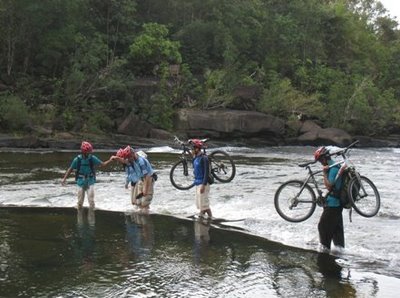
Ecotourism in Cambodia? Community based tourism in Cambodia? Whilst Cambodia is best known for the mighty Angkor Wat temples, beyond these temples the natural beauty of the country is waiting to be discovered. Cambodia offers many opportunities for adventure travel, ecotourism, and community based tourism such as: trekking in tropical forests; homestays with ethnic highlanders; sighting rare wildlife; water-based adventures on rivers and beaches; cycling along dirt roads through traditional villages, and more…
Cambodia has unique ecosystems and impressive landscapes within the country’s 23 protected areas, from pristine beaches and coral reefs to evergreen and deciduous forests. Its abundant natural resources and rich biodiversity hold huge untapped potential for eco-tourism development. Because of decades of war and isolation Cambodia’s countryside remains largely unexplored by travellers. Ecotourism and community based tourism in Cambodia are new introductions for the traveller with a sense of adventure.
There are over 60 rare of endangered species of wildlife in Cambodia, many of which are now extinct elsewhere in South East Asia, including: the Asian Elephant; Tiger; Clouded and Common Leopards, Asiatic Black Bear; Asiatic Wild Dog; Eld’s Deer; Irrawaddy Dolphin; Siamese Crocodile; Banteng; Bengal Florican; Douc Langur; Pileated Gibbon; Elongated Tortoise; Freshwater Sawfish; Giant Catfish; Giant Carp; Grey Ox; Javan; and Sumatran Rhinoceros. Cambodia’s seasonally flooded forests also provide an ideal habitat for several highly endangered water birds: the White Shouldered Ibis; Sarus Crane; and the Greater and Lesser Adjutant Storks.
Community and ecotourism in Cambodia is helping to protect this wildlife as well as the natural environment and local cultures while offering opportunities for much needed employment and sustainable development to poor, often remote, local communities. A much welcomed alternative to the exploitation of the wildlife and local natural resources.
Come to discover the ‘real’ Cambodia, enjoy its wildlife, learn about the different cultures whilst chatting with local villagers, and become a part of the solution by supporting ecotourism in Cambodia!


6:16 AM
John